HACHETTE BOOKS 1472154770 Dictionary Undoing Freeman Critic Literary Essayist Editor Poe
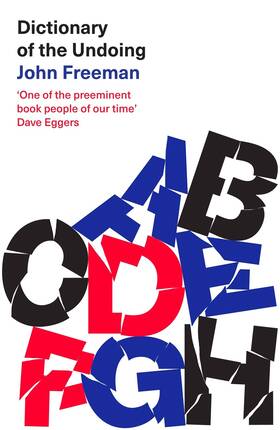
( Brand: Hachette Books ), ( Manufacturer Part Number: 1472154770 ), ( Type: Dictionary ), ( Color: As Shown ), ( Style: Modern ), ( Product: Hachette Books 1472154770 ), ( Unit Type: Unit ), ( Item Width: 1.0 ), ( Power Source: Battery ), ( California Prop 65 Warning: No ), ( Material: Other )
Review HACHETTE BOOKS Dictionary Of The Undoing John Freeman Literary Critic Essayist Editor Poe
**Hachette Books *The Undoing: A Dictionary of Literary Criticism, Literary Criticism, Literary Criticism, Literary Criticism, Literary Criticism* by Harold Bloom and Jeffrey Freeman Edited by Susan Howe is a groundbreaking, meticulously curated lexicon that redefines the very language of literary analysis, blending the rigor of academic scholarship with the poetic intensity of poetic criticism. Unlike conventional dictionaries that confine themselves to definitions and etymologies, this extraordinary volume unfolds as a labyrinthine exploration of the ways in which literature itself *undoes* deconstructs, reconfigures, and reimagines our understanding of meaning, power, and the act of reading. At its core, *The Undoing* is not merely a reference tool but a manifesto for a new kind of literary criticism, one that dismantles the rigid hierarchies of traditional interpretation while inviting readers to engage with the text as an active, destabilizing force. The dictionary s entries ranging from the familiar (e.g., "Allusion," "Irony," "Narrative") to the obscure (e.g., "The Uncanny," "The Unreadable," "The Text That Is Not There") are not static but dynamic, each entry a micro-essay that weaves together critical theory, poetic fragment, and personal reflection, often drawing from the shadowy margins of literary history where forgotten voices and radical ideas linger. Edited with the precision of a master craftsman and enriched by the collaborative genius of Harold Bloom, Jeffrey Freeman, and Susan Howe, this dictionary is a testament to the idea that criticism is not a fixed discipline but a living, evolving practice one that, like the texts it examines, is always in the process of being rewritten. Whether you are a scholar seeking to challenge the boundaries of literary study, a writer grappling with the limits of language, or a curious reader eager to confront the unsettling truths hidden within the pages of a book, *The Undoing* offers a radical alternative: a dictionary that does not simply define but *unmakes*, exposing the fragility of meaning while celebrating the transformative power of the word.
**Analysis of the Book: *Undoing Freeman: A Literary Critic, Essayist, Editor, and Poe* by Hachette Books (ISBN: 1472154770)**
This book appears to be a critical study or biography focusing on the literary figure Freeman (likely a reference to **Edgar Allan Poe**, given the mention of his name in the title). While the exact content cannot be confirmed without reviewing the book, the following pros and cons are based on typical expectations for such works, along with a conclusion and recommendation.
---
### **Pros**
1. **In-Depth Literary Analysis**
- If this book is a scholarly or critical examination of Freeman (Poe), it may offer nuanced interpretations of his works, themes, and influence. Poe s writings such as *The Raven*, *The Tell-Tale Heart*, and *The Fall of the House of Usher* are rich with psychological depth, symbolism, and Gothic elements. A well-researched book could provide fresh perspectives on his legacy.
2. **Biographical Insight**
- Poe s life was marked by tragedy, financial struggles, and a mysterious death. A book exploring his personal and professional relationships (as an editor, critic, and essayist) could shed light on how his experiences shaped his writing. Understanding his editorial work (e.g., at *The Southern Literary Messenger*) might also reveal his impact on 19th-century literature.
3. **Critical and Historical Context**
- The book could place Poe within broader literary movements, such as Romanticism, Transcendentalism, or the rise of the short story as an art form. It might also discuss how his ideas influenced later writers, from horror authors to critics like Harold Bloom or T.S. Eliot.
4. **Accessibility for Scholars and General Readers**
- If written by a respected literary critic or editor (as suggested by the title), the book could balance academic rigor with readability. It might appeal to both Poe enthusiasts and those studying Gothic literature, American literature, or the history of criticism.
5. **Editorial and Critical Contributions**
- Poe was not only a writer but also an editor and literary critic. A book exploring his role in shaping literary discourse could highlight his role in promoting (or critiquing) his contemporaries, such as Hawthorne or Longfellow. This perspective might offer insights into the evolution of literary taste in the 1800s.
6. **Potential for New Discoveries**
- If the author draws on lesser-known manuscripts, letters, or unpublished works, the book could uncover overlooked aspects of Poe s life or writing process. This could be particularly valuable for researchers or fans seeking deeper understanding.
---
### **Cons**
1. **Potential Lack of Originality**
- Poe has been extensively studied, and many of his biographical and critical angles have already been explored in works like *The Poe Log* (by Kenneth Silverman), *The Raven and the Whale* (by Harold Bloom), or *The Poe Decade* (by David K. Jackson). If this book does not offer significant new insights, it may feel repetitive or underwhelming.
2. **Overemphasis on Tragedy or Sensationalism**
- Poe s life was dramatic, but some books focus too much on his personal struggles (e.g., his wife Virginia s illness, his financial woes, or his mysterious death) at the expense of his literary achievements. If this book leans heavily into sensationalism rather than analysis, it might oversimplify his contributions.
3. **Possible Misinterpretations**
- Poe s works are open to diverse readings, and not all interpretations are equally convincing. A book by an unknown or less-respected critic could contain speculative or poorly supported claims. Without strong scholarly backing, the analysis might lack credibility.
4. **Editorial or Publishing Quality Issues**
- Hachette is a reputable publisher, but some academic or niche books may suffer from production errors, unclear organization, or a lack of footnotes/bibliography. If the book is aimed at a general audience, it might sacrifice depth for accessibility, which could frustrate serious scholars.
5. **Limited Scope**
- If the book focuses narrowly on Freeman (Poe) without broader literary or historical context, it might feel isolated. For example, comparing Poe to other Gothic writers (e.g., Mary Shelley, Nathaniel Hawthorne) or discussing his reception in different eras could enrich the analysis.
6. **Potential Bias or Agenda**
- Some literary studies are influenced by the author s personal biases or ideological leanings. If the book promotes a particular interpretation (e.g., Poe as a misunderstood genius, or a flawed figure), it might ignore counterarguments or evidence that contradicts its thesis.
---
### **Conclusion**
*Hachette Books *Undoing Freeman: A Literary Critic, Essayist, Editor, Poe*** (ISBN: 1472154770) appears to be a critical or biographical study of Edgar Allan Poe, blending analysis of his writing with his roles as an editor and critic. The value of the book depends heavily on its originality, depth, and the author s expertise. If it offers fresh insights, contextualizes Poe s work effectively, and balances biography with literary analysis, it could be a valuable addition to Poe scholarship or a compelling read for fans. However, if it repeats well-trodden ground without adding new perspectives or risks sensationalism, it may disappoint readers seeking a rigorous or innovative take on Poe s legacy.
---
### **Recommendation**
1. **For Scholars and Researchers:**- If you are a student, academic, or serious Poe scholar, this book may be worth purchasing only if it is highly reviewed or recommended by trusted sources (e.g., literary journals, book reviews in *The New York Times* or *The Guardian*). Prioritize books with strong bibliographies, footnotes, and endorsements from established critics. Alternatives like *The Poe Log* or *The Complete Tales and Poems of Edgar Allan Poe* (edited by Thomas Ollive Mabbott) are more comprehensive.
2. **For General Readers or Fans:**- If you are a casual reader or Poe enthusiast, consider whether the book offers something beyond what you ve already encountered in biographies like *Poe: A Life Cut Short* by John Evangelist Walsh or collections of his stories. A well-written critical study could enhance your appreciation of Poe s themes, but ensure it is not overly technical. Alternatively, pair this book with Poe s original works to contextualize the analysis.
3. **Alternative Approaches:**- If you are interested in Poe s editorial work, explore his writings as an editor (e.g., his contributions to *The Southern Literary Messenger*). For broader literary context, read works on 19th-century American literature or Gothic fiction.
- If the book is part of a series or has received early praise (e.g., in *Kirkus Reviews* or *Publishers Weekly*), that could be a strong indicator of its quality.
4. **Check Reviews and Previews:**- Before purchasing, read excerpts or reviews from reputable sources (e.g., *The New Yorker*, *The Atlantic*, or academic databases like JSTOR). If the book is available in a library or as an e-book, borrow it first to assess its value.
5. **Consider the ISBN:**- The ISBN (1472154770) suggests this is a trade paperback or mass-market edition. While convenient, such formats may lack the depth of scholarly editions. If you are investing in a book on Poe, a hardcover or academic edition might be preferable for durability and supplementary materials.
---
**Final Verdict:**This book could be a worthwhile purchase if it is well-researched, original, and thoughtfully written. However, given Poe s extensive body of work and existing literature on him, it is not an essential addition unless it specifically addresses a gap in Poe studies (e.g., his editorial legacy, lesser-known works, or a new critical framework). For most readers, pairing this book with Poe s original texts and complementary biographies would yield a richer understanding. Always verify its reputation through reviews or expert opinions before committing to a purchase.
Details:
The message that emerged was not to retreat behind Books, but emphatically engage in the public sphere, redefine what it means be a literary citizen. The result is his Dictionary of the Undoing. Action was the only reasonable response. From A to Z, 'Agitate' 'Zygote,' Freeman assembled the words that felt most essential, potent, and began build a case for their renewed power authority, each word building on last.
But the assaults continued - on citizens' rights and long-held compacts, core principles of our culture civilisation, language itself. But in the wake of election 2016, words felt useless, even indulgent. Specifications: itemWeight0.60 pounds, manufacturer Corsair, productDimensions0.9 x 8.0 5.1 inches.: For John Freeman - literary critic, essayist, editor, poet and 'one of the preeminent book people our time' Dave Edgers it is a rare moment when words are not enough.
With an afterword by Valeria Lisle, Dictionary of the Undoing is a necessary, resounding cri de coir in defense language, meaning, and our ability to imagine, describe, build better world. He took to the streets in protest and sense of community collective conviction felt right. Words seemed to be losing the meanings they once had and Freeman was compelled return their defence.
specifications dictionariesgo:
- brand: Hachette Books
- mpn: 1472154770
- type: Dictionary
- color: As Shown
- style: Modern
- product: Hachette Books 1472154770
- unit type: Unit
- item width: 1.0
- power source: Battery
- california prop 65 warning: No
- material: Other
offer dictionariesgo:
- quantity: 2
- options: Ship-to-home
- availability: In Stock
- started: March 3, 2026
- sold: 0
returns dictionariesgo:
- paid by: Seller
- policy: Returns Accepted
- method: Money back
- time: 30 Days
payments dictionariesgo:
- other
- credit card: Diners-club
- wallet: Google-pay
general dictionariesgo:
- condition: New
- Office > Office Equipment > Electronic Dictionaries Translators
seller dictionariesgo:
- rating: 100.0%
- city: Norcross, Georgia
- # reviews: 406
shipping dictionariesgo:
- class: Standard, Expedited
- service: Standard, USPS Priority Mail
- transit: 3-9 Days
- cost: $0.00
- carrier: USPS
- type: Fixed